About two decades ago, I found myself in a situation that required immediate medical intervention.
I was a young mother in Los Angeles, nursing a newborn, when a sharp “kink” in my neck rendered me practically immobile. I woke up one morning, barely able to turn my head. It was as if my body had locked itself into place and refused negotiation. I went to a Beverly Hills general practitioner expecting a quick fix—a prescription.
The doctor was hesitant. Under different circumstances, he said, he would prescribe a muscle relaxer. But there was a problem: I was breastfeeding. Medication wasn’t an option.
Instead, he suggested something I had only vaguely heard of and frankly didn’t trust—acupuncture.
At the time, as a Midwestern transplant living on the West Coast, I associated acupuncture with something just shy of fringe medicine. Still, I was in pain and out of options. My insurance covered it, so I agreed.
Years later, after discovering that my system doesn’t metabolize ibuprofen or acetaminophen effectively, I found myself revisiting acupuncture. My search eventually led me to Tao He in Comstock Park, whose approach to healing bridges Eastern medical tradition and Western clinical training.
The recommendation came from an unexpected source. I stopped into Harvest Health, the longtime local health food and supplement store, and asked an employee if they knew of an acupuncturist they could recommend. They suggested Tao. It’s a reminder that sometimes the best local referrals come from simply asking someone who knows the community.
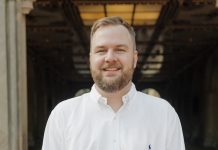
Tao is an interesting character, too. Beyond his work in healthcare, he’s a musician who plays and collects guitars. It’s a personal passion that adds another dimension to someone whose own journey has taken him across cultures and continents.

A Path That Began in Two Medical Worlds
Tao He’s path began far from the Midwest, in Guangxi, China, near the Vietnam border. His early training took place at Guangxi Medical University, where he completed a rigorous five-year Traditional Chinese Medicine program followed by a two-year internship and extensive clinical residency.
He later expanded his medical education in the United States, studying biomedicine at Western Kentucky University and completing additional training in physical therapy and rehabilitation sciences at institutions including Grand Valley State University.
That dual perspective—Eastern herbal and energetic systems paired with Western biomechanics and rehabilitation science—would become the foundation of his practice.
In clinical settings such as Bronson Methodist Hospital and integrative health programs in Southwest Michigan, he worked alongside physicians, physical therapists, and holistic practitioners, contributing to a growing recognition that pain, stress, and chronic illness rarely have a single cause.
Today, Tao maintains a modest practice in Comstock Park. The setting is intentional: He’s chosen to keep his overhead low so that treatments remain affordable and accessible to people who might not have a lot of money to spend on their health. In an industry where wellness services can come with increasingly hefty price tags, that commitment is worth noting.
What Acupuncture Actually Is
At its core, acupuncture is a system of medicine that uses ultra-thin, sterile needles placed at specific points on the body to influence physiological function, reduce pain, and support healing.
In traditional theory, those points correspond to pathways of energy flow. In modern biomedical terms, they are increasingly understood through the lens of neurochemistry, circulation, and the nervous system.
Tao He describes the body as a “bioelectric system,” where stimulation of specific points can influence neurotransmitters and hormone regulation. Research in recent decades has supported this framework in part, showing acupuncture’s relationship to endorphin release, serotonin modulation, and cortisol regulation.
In practical terms, this means acupuncture is often used not only for pain, but for conditions tied to stress regulation, inflammation, and nervous system imbalance.
When Medication Isn’t an Option
Acupuncture’s role becomes especially relevant in situations where pharmaceutical intervention is limited or undesirable.
Postpartum recovery is one example. Chronic pain conditions are another. Patients with sensitivities to anti-inflammatory drugs, steroid dependence, or gastrointestinal conditions that make NSAIDs risky often seek alternatives. Others turn to acupuncture during cancer treatment, when conventional therapies may be too taxing on the body’s protein and immune systems.
Tao He also works with patients dealing with asthma, hormonal imbalance, fatigue syndromes, and stress-related disorders such as anxiety and insomnia. In his clinical view, these are not isolated conditions but expressions of systemic imbalance—physical, emotional, and environmental.
He emphasizes that acupuncture is not a single-treatment solution but a process. Acute issues may respond quickly, sometimes within one or two sessions, while chronic conditions require sustained care over time.
The Experience of Treatment
While the idea of needles can be off-putting to those not familiar with acupuncture, patients often describe sessions as deeply relaxing.
A typical session involves lying comfortably in a dim room while very fine needles are placed at targeted points. Most remain in place for 20 to 30 minutes. Music is often played, lights are lowered, and the environment is designed to encourage the nervous system to downshift from stress response into rest and recovery.
The needles themselves are significantly thinner than those used for injections, and most patients report minimal to no discomfort during insertion.
For many, the experience becomes less about the needles and more about the pause they create in a body that is constantly “on.”
Beyond Pain: Stress, Mood, and the Nervous System
One of the most discussed aspects of acupuncture today is its influence on mental and emotional health.
In clinical practice, practitioners like Tao He see patients dealing with depression, anxiety, trauma responses, addiction cravings, and burnout. He frames these not only as psychological conditions but as disruptions in the body’s regulatory systems—sleep, hormones, circulation, and stress chemistry.
He notes that stimulation of acupuncture points may support dopamine and serotonin balance, along with endorphin release, which can influence mood, motivation, and emotional resilience.
For some patients, this manifests in subtle but meaningful ways: improved sleep, reduced irritability, decreased cravings, or a sense of emotional steadiness that had previously been missing.
A Broader View of Healing
One of the central ideas in Tao He’s practice is that health cannot be separated into isolated systems. Physical pain, emotional stress, hormonal function, and environmental factors are interconnected.
In his words, he treats “the whole body—not just one part,” including what he describes as the energetic and environmental dimensions of health. While modern medicine often separates specialties into distinct categories, acupuncture takes a more integrative approach.
And it is this perspective that resonates with patients open to moving between conventional medical systems and complementary care in search of sustainable relief.
Returning to the Body’s Capacity to Heal
My own return to acupuncture years after that first unexpected introduction in Los Angeles wasn’t driven by ideology. When standard pain relievers stopped working for me, I needed another option.
What I found was not an alternative, but another framework for understanding the same body I had always lived in.
In that framework, pain is not simply something to suppress, but something to interpret. The nervous system is not just reacting—it is communicating.
Practitioners like Tao He occupy a space between traditions, drawing from centuries-old Chinese medical systems while engaging with modern biomedical research and rehabilitation science. That blend is increasingly shaping how patients think about care when medication alone is not enough—or not possible—and offers another way to listen to the body when it speaks in pain.