The press called him the “Michigan Assassin.” Grand Rapids’ Stanley Ketchel fought with a fury displayed by few pugilists before or since. Twice, he held the world middleweight boxing championship. To this day, boxing historians regard him as one of the sport’s most fearsome competitors. He died at age 24—murdered in a robbery during the first respite of his adult life. Stanley Ketchel grew up on Grand Rapids’ west side but discovered a turbulent, tempting world far from his West Michigan home.
He was born Stanislaw Kiecal in Grand Rapids on September 14, 1886. His parents, Tomasz and Julia Kiecal migrated to Michigan from what is now Poland. The family resided on the West Side in a Polish enclave on Stocking Avenue. Today, there’s a Stanley Ketchel plaque at the corner of 3rd Street and Stocking Avenue near where his boyhood home once stood.
Stanislaw saw little school and took to the streets at an early age, fighting and stealing his way into a group of local toughs. The viciousness he displayed as a prize fighter was evident in him from a young age. When he got into a fight (not an uncommon occurrence), he kept throwing punches until someone pulled him off his opponent.
Stanislaw idolized cowboys and the American West. At age 12, he started riding the rails around west Michigan. At age 14, he left home and became a vagabond of the rails, striking westward in search of work and adventure. The young drifter found work in a variety of western mining or lumber towns.
Eventually, Ketchel settled in the copper mining boom town of Butte, Montana. The Michigander fit right in among Butte’s rough-and-tumble burghers. Boozing, gambling, and prostitution were fixtures in the fast money town. Robberies and murders were regular occurrences in the frontier community.
Despite his age and stature (he was full grown at 5’9, 150 pounds), he started working as a bouncer at a saloon where fights were the norm. He impressed enough as a bouncer that his employer thought the teenager could make a living as a fighter.
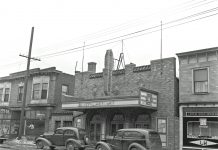
Stanislaw began his boxing career at Butte’s Casino Theatre, taking on all comers from $20 per bout. He adopted the Americanized name “Stanley Ketchel” to appeal to local fight fans, of whom there were many. One of the primary things that people in Butte liked to gamble on were fights.
It didn’t take the rechristened Ketchel long to earn the reputation as the best fighter in town. He lacked formal training as a fighter but made up for it with fury. He worked himself into a frenzy before fights and attacked his opponents with a whirlwind of lefts and rights. Fight fans love to say that punchers are born and not made. If that’s the case, then Ketchel was some kind of pugilistic Gemini. He had the rare quality of possessing knockout power with both hands. Frequently, he took on much larger opponents and pounded them into submission.
Such fury was necessary to win fights in a town like Butte. His opponents would bite him, gouge his eyes, and rabbit punch. Members of the audience were even known to intervene in these brutal affairs.
By age 17, Ketchel ventured beyond Butte into other Montana cities on the lookout for fights. Within three years of his professional debut in 1903, Ketchel had 42 professional fights. He had lost just two of them. To psyche himself up before bouts, he sent telegrams back to his mother in Michigan telling her that he had won. He had no choice then but to pummel his opponent.
Ketchel’s reputation for mayhem soon extended to other aspects of his life.
Cocksure and reckless, Ketchel had a temper in and outside of the ring. He drove cars like a madman and played fast and loose with firearms, once shooting an associate in the leg during a round of horseplay. He made the acquaintance of an ever-changing retinue of young women. He kept a Colt .45 on his lap while he ate and on his hip when he walked around town. He spent money as soon as he earned it on his drink, his ride, and his flashy clothing. Ketchel carried wads of cash around with him and didn’t mind letting people know that he had it.
In 1907, Ketchel moved to California to compete against the top names in prize fighting. In California, Ketchel became the middleweight champion
Just when Ketchel became the world’s top middleweight is a matter of dispute. The sport was significantly more decentralized in the early twentieth century than it would become decades later. Ketchel twice defeated Joe Thomas in 1907, a man recognized in some quarters as middleweight champ.
On February 8, 1908, Ketchel knocked out Welterweight champion Mike “Twin” Sullivan in the first round. Some observers considered him Mike Sullivan the middleweight champion as well. In May, Ketchel knocked out Mike’s brother, Jack (Confusingly, also nicknamed “Twin) Sullivan, whom still others regarded as the legitimate middleweight champion. By that point, Ketchel was regarded universally as the lineal middleweight champion.
On September 7, 1908, Ketchel lost his middleweight title to Billy Papke, who knocked him out in the twelfth round. The fight was, to say the least, controversial. Before the fighters touched gloves to start the fight, Papke sucker punched Ketchel, decking him with a hard right. Amazingly, the referee did not disqualify Papke and the fight went on with Ketchel dazed throughout the contest.
In a return bout, Ketchel KOed Papke in eleven rounds on Thanksgiving night 1908, making him the first person to regain the middleweight crown. Ketchel would retain the middleweight title for the rest of his life.
Unsatisfied with just pounding on middleweights, Ketchel spent 1909 trying to demonstrate that he could beat any fighter in the world, regardless of their size.
To this end, Ketchel defeated former light heavyweight champion Philadelphia Jack O’Brien twice, knocking him unconscious at the conclusion of a ten-round decision victory and knocking him out in the third round of the rematch.
Ketchel even challenged heavyweight champion Jack Johnson on October 16, 1909 in Colma, California. Johnson had a 35-pound weight advantage and largely toyed with Ketchel, who came right after the heavyweight champion. In the 12th round, Ketchel shocked Johnson, drilling him with a right hand that sent the champion to the mat. Johnson popped right up and headed right for Ketchel, battering him with a vicious combination that knocked the middleweight unconscious and deprived him of several teeth.
After a handful of fights in 1910, Ketchel decided it was time for a break. He moved to a ranch in southern Missouri owned by a friend from Grand Rapids named R.P. Dickerson.
On October 14, 1910, Ketchel died at the hands of a couple who worked at the ranch and decided to rob the well-heeled fighter.
Goldie Smith was a cook that had been hired recently to work on the ranch. Her boyfriend, Walter Dipley, worked as a ranch hand. On the morning of the 14th, Smith seated Ketchel for breakfast with his back to the front door. Dipley came up behind Ketchel with a rifle and shot him through the back. The bullet lodged in his lung. Smith went through Ketchel’s pockets and took his money. Dipley took Ketchel’s gun and bludgeoned him with him before absconding.
Ketchel told a ranch hand what had happened and a posse gathered to look for the killers. Dipley and Smith were both apprehended soon thereafter.
Dickerson chartered a train to take Ketchel from his ranch in Conway to Springfield, Missouri, the nearest city with a hospital. Ketchel died around 12 hours later at the hospital.
Smith and Dipley were charged with murder. Prosecutors asserted that robbery was the primary motivation for the crime. The couple was convicted and sentenced to life in prison. Smith served just 17 months for robbery, but her murder conviction was later overturned. She asserted that she had no idea that Dipley would kill Ketchel. Dipley spent 23 years in prison before being paroled.
Ketchel’s body came back to Grand Rapids on a train. More than five thousand people mourned Ketchel at the Basilica of St. Adalbert, following the body to Holy Cross Cemetery for burial. At the time, it was said to be the largest funeral in the history of the city.
The memory of Stanley Ketchel has remained strong among boxing historians.
In 2004, The Ring Magazine ranked him as the eight greatest middleweight of all time and the sixth greatest puncher of all time, regardless of weight class. Decades earlier, The Ring Magazine’s founder Nat Fleischer ranked Ketchel as the greatest middleweight ever. He was inducted into the International Boxing Hall of Fame in 1990. Additionally, he is a member of the Michigan and Grand Rapids Sports Halls of Fame.
Ketchel is the subject of several works of fiction and biographies. Ernest Hemingway wrote a short story called “The Light of the World,” focused on a conversation between two women who claim to have been involved with the deceased fighter.
Locally, recognition of Ketchel has grown in recent years.
In 2015, a bronze sculpture of Ketchel created by Ann Hirsch was unveiled on Bridge Street on the city’s West Side. The statue was commissioned by philanthropist Peter Secchia as part of the Grand Rapids Community Legends project.