The Benton Harbor commune known as the Israelite House of David is a fascinating chapter in American religious and cultural history, blending spiritual ambition with public spectacle. Founded in 1903, the community grew out of a religious movement that began in late 18th-century England, with members—mostly Anglo-American or European Christians — identifying spiritually as Israelites. The House of David gained national fame for its accomplished baseball team, amusement park, and touring musical acts. At its peak in 1918, it counted more than 1,000 members—all of whom gave up their assets and personal agency in search of a better way of life.
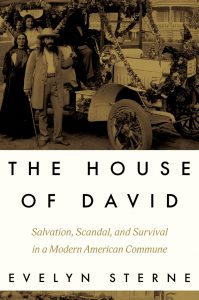
Historian Evelyn Sterne captures the rise and collapse of this unusual community in her book The House of David: Salvation, Scandal, and Survival in a Modern American Commune. Through her research, she explores how the group achieved nationwide fame before spiraling into chaos.
Of all their ventures, the House of David’s baseball team is the most enduring symbol. Instantly recognizable by their long hair and unshaven beards (a distinctive feature of the Benton Harbor sect), the team traveled across the country winning a significant majority of their games. They also incorporated comedy-style antics similar to the Harlem Globetrotters (though it is said they preceded them), creating a unique blend of sport and showmanship.
Music was another cornerstone of community life. With both an orchestra and a jazz band, the House of David performed shows across the nation, carrying their reputation far beyond Benton Harbor. At home, they built a full-fledged amusement park, Eden Springs, that quickly became a tourist attraction for Chicago families seeking weekend recreation.
Yet, for all their public achievements, the community’s legacy is equally tied to scandal. Near the end of his life, founder Benjamin Purnell was placed on trial for fraud and accused of engaging in sexual relations with young women in the commune. The allegations cast a long shadow over the group, reshaping its national image.
Today, only three members of the House of David survive—two from the original community and one from an offshoot called Mary’s City of David, formed by Purnell’s wife. Their work now centers on preserving the commune’s history.
For visitors to Benton Harbor, the remnants of the movement remain visible. Abandoned buildings stand as a ghostly reminder of what once was—a thriving, insular world that blurred the line between utopian dream and cautionary tale. Walking through the grounds, it’s hard not to feel the strange gravity of a place that once drew thousands but now exists as memory and ruin.
The Author’s Perspective
Behind the retelling of this story is Evelyn Sterne, Professor of History and Director of the Center for the Humanities at the University of Rhode Island. Sterne’s academic work consistently circles back to one central question:

Why are people religious? It’s a theme she first explored in her earlier book, Ballots and Bibles: Ethnic Politics and the Catholic Church in Providence.
When it comes to the House of David, Sterne argues that the social and economic backdrop of the early 20th century was crucial. With World War I and the Great Depression shaping daily life, individuals were primed to seek refuge in communities that promised security, belonging, and meaning. Within that context, giving up possessions, becoming a vegetarian, rejecting family ties, and working for free in service of a collective no longer seems unimaginable.
Inconvenient Truth
Remarkably, many members and nearby townspeople spoke well of the House of David, as did Chicago tourists who visited their park. This complicates the narrative, leaving us to consider both the genuine sense of community the group offered and the darker scandals that defined its decline.
Today, Sterne continues her research into the pull of extreme theologies in American history, particularly in the multi-denominational landscape of the late 19th and 20th centuries. Her work suggests that the House of David is not just a quirky footnote, but part of a larger pattern of religious experiments that rose and fell in response to social upheaval.
In the end, the story of the Israelite House of David commune invites us to reflect on how communities form, how they fracture, and why people are willing to trade so much for the promise of something unseen, or, perhaps, something greater.
For a deeper dive into this strange Southwest Michigan cult, The House of David: Salvation, Scandal, and Survival in a Modern American Commune is available for purchase at most major booksellers and is published by Oxford University Press.